


CCDS vs Local Labels: Managing Global Labeling Deviations
How pharmaceutical teams manage CCDS vs local labels while maintaining compliance, traceability, and governance A Real World Scenario A multinational […]
How pharmaceutical teams manage CCDS vs local labels while maintaining compliance, traceability, and governance A Real World Scenario A multinational […]
How pharma teams can prepare for structured product information, FHIR readiness, and EU ePI standards Your organization has spent decades

What Pharma Companies Need to Know About ePI FHIR When the European medicines regulatory network adopted the EU ePI Common

How EU ePI and FDA SPL Create Parallel Labeling Workflows A director of Regulatory Affairs at a mid-sized pharma company

Regulatory data trust is an outcome of regulatory data management behavior, not intent Pharmaceutical organizations often think about regulatory trust

Global growth in pharma increases complexity before it increases value. This article explains why global labeling harmonization and aligned data foundations are essential for scaling across markets without slowing execution.

Pharma timelines don’t slip because teams are slow, they slip because data is immobile. The regulated information driving global submissions,

Fragmented regulatory data quietly slows launches, increases reconciliation work, and erodes trust. This article explains why centralized data management is becoming essential in pharma.

Pharma data governance enables compliance and speed by embedding control into data at the point of creation. Learn how centralized governance improves traceability, reuse, and execution across regulated environments.

The conversation about data quality for AI in pharma has shifted. It is no longer an upstream IT concern or

Digital transformation is not a system problem — it is a data flow problem Digital transformation initiatives often center on

2026 Pharma Readiness: Regulatory Readiness Is Now an Enterprise Capability Regulatory readiness has shifted from a supporting function to a

ICH M4Q(R2) restructures how CMC content is organized within the CTD. This article explains what the revision means for structured authoring, PQ/CMC readiness, and global submission planning.

Pharma acquisitions do not just inherit assets. They inherit labeling, CMC, SOP, and submission-history complexity that must be governed under one audit-ready model after close.

EMA ePI requirements are moving from roadmap item to operational mandate. This article explains what the shift means for labeling, regulatory, and CMC content operations.

The joint good AI practices principles released in January 2026 set a clear standard for AI in regulated contexts: traceable

On March 5, 2026, FDA published a final rule establishing a uniform 12-digit National Drug Code (NDC) format. The rule

Pharmaceutical Quality–Chemistry, Manufacturing, and Controls (PQ-CMC) is often framed as a technical modernization effort—a move toward structured data, improved submission

Senior leaders are rarely pulled into submissions because teams are behind schedule. They are pulled in when outcomes become uncertain—and

For Chemistry, Manufacturing, and Controls (CMC) and regulatory leaders, confidence in regulatory outcomes depends less on the quality of any

Regulatory Work Is Stuck in a Failing Economic Model Pharmaceutical regulatory operations still run on a linear economic model in

For many years, pharma sustainability and regulatory functions ran largely separate agendas: ESG teams focused on Scope 3 emissions, material

Introduction: Why a Trusted Regulatory Space Is Becoming Necessary Digital transformation in life sciences is accelerating—but regulatory operations remain constrained

2026 Will Be the Year Structured Content in Pharma Becomes Essential For years, pharma has managed product information through sprawling

Why Regulatory Teams Are Shifting Toward Modular Content in eCTD 4.0 Submissions Traditional document-based processes—where content is authored, reviewed, and

Introduction: Beyond Technology — The Human Side of Content Transformation in Life Sciences Life sciences digital transformation is comprehensive, ongoing

Component-Based Labeling is Transforming Pharma Regulatory labeling is a dynamic ecosystem spanning multiple markets, health authorities, and product lifecycles —

The Current State: Siloed Tools and Disconnected Data Flows Regulatory content is everywhere—regulatory submissions, labeling, clinical documentation, quality systems, and

Introduction: AI in Regulated Content Management Meets Compliance in Life Sciences Artificial intelligence (AI) is reshaping industries that rely on

The Challenge: Fragmented Authoring and Redundant Writing in Clinical Operations For decades, clinical documentation has been both the foundation and

In the highly regulated world of life sciences, achieving both efficiency and accuracy in content creation isn’t just an operational

How governed, structured content enables responsible AI in life sciences. Artificial intelligence (AI) has moved from a buzzword to a

Global Labeling Harmonization in Pharma: Building a Single Source of Truth Pharmaceutical labeling remains one of the industry’s most fragmented

SPOR and IMDP 2.0: Turning Compliance into Competitive Advantage The Identification of Medicinal Products (IDMP) initiative was once viewed as

Digital Twin Pharma: The Future of Regulatory Submissions? Digital twins have transformed industries such as aerospace, automotive, and manufacturing by

Regulatory Information Management 2025: From Repository to Intelligence Hub For years, Regulatory Information Management (RIM) systems have been the quiet

Key Takeaways The Hidden Obstacle to Digital Transformation in Clinical Trials: Unstructured Content For all the talk about digital transformation
Breaking Down Silos: Pharma’s Interoperability Imperative Pharma’s digital transformation has is modernizing labeling, digitized document management, and integrated Regulatory Information

ePI is reshaping pharma’s digital future. Learn how structured content and AI help life sciences companies meet compliance faster, with accuracy, agility, and scale.

eCTD 4.0 is reshaping regulatory submissions for life-sciences. Learn how structured content strategies help sponsors stay compliant and speed approvals.

Explore how to choose an AI + structured content (AI-SCA) platform for pharma—covering compliance, metadata, integrations, and buying traps you should avoid.

Discover how AI-powered structured content authoring transforms pharma documentation — from labeling and safety narratives to CTD module alignment and metadata tagging.

Last year I wrote about why booking too far in advance can be dangerous for your business, and this concept of margin so eloquently captures what I had recognized had been my problem: I was so booked up with clients that I wasn’t leaving any margin for error, growth, planning, or reflection.

Explore how structured content transforms life-sciences: driving reuse, traceability, regulatory readiness, and faster time-to-market in pharma. Includes download.

Explore how AI-SCA supports pharma’s shift to digital-first regulation (ePI, IDMP, CTD 4.0) by enabling modular, metadata-rich content, faster review, and audit-ready operations.

AI on its own isn’t enough. Learn why structured component authoring is the essential groundwork for AI-driven regulatory content operations in pharma.

Explore a structured readiness assessment for AI + structured content in pharma—covering leadership buy-in, metadata, governance, systems and roadmap to compliance.

Why “structured” is the doorway—not the destination—for lifecycle-ready pharma content. Pharma and biotech teams have spent years modernizing how they
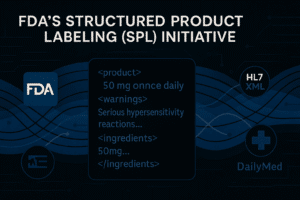
The pharmaceutical industry operates within an increasingly complex regulatory landscape where accuracy, consistency, and compliance are non-negotiable. The FDA adopted the SPL standard to improve regulatory processes and ensure more efficient oversight.

Discover why structured content authoring (SCA) is the strategic shift global pharma needs for labeling—cutting risk, accelerating updates and enforcing consistency across markets.

Shift your regulatory submissions from manual to modern with structured content—cut duplication, accelerate review, and deliver faster in life sciences.

In pharmaceutical regulatory operations, most attention goes to visible systems—document management, RIM platforms, publishing tools, and increasingly, AI for structured authoring. But none of these tools can function effectively without one often-overlooked element: metadata.

Structured content reshapes medical writing—switch from full-document drafting to reusable components, metadata-governed modules and strategic content reuse.

See what structured content really looks like in pharma—modular, metadata-rich components that drive reuse, traceability and scale across global documents.

Learn how structured content authoring transforms life-sciences workflows—breaking documents into reusable components, enhancing compliance and speed across submissions.

Explore how structured content authoring accelerates ePI readiness in pharma—driving flexibility, multilingual reuse and machine-readable compliance.

Explore how modular content and structured component workflows empower pharma companies to optimise reuse, shorten reviews and manage global/local content with agility.

Traditional CMS tools manage documents; AI-powered structured content platforms manage modular, metadata-rich components—key for regulated pharma scale.

A convergence of global mandates, production scale and AI readiness is forcing pharma to adopt structured content now. Delaying is no longer viable.

Uncover the truth behind five common myths about AI in pharma documentation—and how structured content makes adoption practical, safe and scalable.

Explore 10 essential questions to evaluate AI-powered Structured Content Authoring (SCA) vendors—focused on reuse, metadata, audit readiness, systems and long-term strategy.

Discover how AI-powered structured content authoring transforms pharma documentation — from labeling and safety narratives to CTD module alignment and metadata tagging.

Learn how structured authoring transforms ePI from a formatting task into a strategic advantage—enabling metadata-rich, reusable content for global product information compliance.

AI can boost documentation—but not alone. Explore why pharma must pair AI with structured-content governance to ensure accuracy, traceability & compliance.

AI raises expectations in pharma documentation—but alone it’s not enough. Learn why structured content and governance are essential.

There’s no denying it; pharma is in its innovation era. The life sciences industry is already undergoing a massive revolution, thanks to the rapid integration of artificial intelligence (AI). We’re experiencing a transformation that will likely redefine every aspect of the medical field, from research and drug development to patient care — and beyond.

Are you wondering where to start with your change management strategy as you integrate Docuvera’s structured component authoring (SCA) into your enterprise? Adding new solutions to your tech stack is not just a “change of software” but an opportunity for transformation. For life sciences organizations, letting go of disconnected systems and centralizing content and workflow is a game changer.

For the life sciences industry, change tracking is integral to the quality assurance process. It allows authors to keep track of any changes made to document content, which helps ensure quality output.

Artificial intelligence (AI). It’s everywhere, and it’s changing the world as we know it. From chatbots to self-driving cars, AI is here to make our lives easier AND take our jobs. Right? Well…not exactly, our jobs are safe for now.

Deviating from familiarity can make people feel uncomfortable. At the same time, humans are adaptable; have you ever protested a software update for an app on your phone? You likely grumbled a little bit, but before you even realized it, you were moving on with your life, if not appreciating the improvements.

Around the globe, artificial intelligence (AI) is all the buzz, including international healthcare events like DIA Europe and DIA Global. With the potential to revolutionize healthcare, accelerate drug discovery, and enhance patient outcomes, AI has sparked immense excitement in the life sciences — assuming it can find its ideal application.

Pharmaceutical labeling content requires compliance, accuracy, collaboration between departments and stakeholders, and often translation. When most of the process happens through disparate platforms, it becomes time-consuming and costly for life sciences organizations.

In part one of our Pharmaceutical Labeling and the Promise of SCA series, we examined the unique challenges in pharmaceutical labeling and why the industry has yet to utilize structured component authoring (SCA) fully. The verdict? Pharmaceutical labeling content has many components, including compliance, accuracy, collaboration between departments and stakeholders, as well as translation.

The drug documentation lifecycle is long and involves many people along the way. From in-depth review processes to challenges in auditing and tracking content, Life Sciences organizations that are still using publishing programs like Microsoft Word are likely spending a lot of resources to build document processes based on 1980s technology.

Imagine your team of medical information writers has spent days, months, maybe even years authoring, reviewing, and updating drug development content in a program like Microsoft Word. This process involved the writing itself and multiple rounds of reviews, as well as sifting through hundreds of paragraphs to update a single sentence and countless hours reconciling various versions.

For many Life Sciences organizations, a leading challenge — on top of a very long product development cycle — is that the work is completed across departments, time zones, and even languages. Many pharma content teams must work collaboratively using tools that don’t support an efficient exchange of information, especially when you factor in translation and localization.

In Pharma, one form of technology that offers great promise is a structured component authoring (SCA) platform. When Life Sciences organizations choose to roll out new tools of any type, hopes are typically high; adoption needs to go smoothly all the way from implementation to individual use. You want resources to support functionality. And you want a solution that saves your organization time and money on whatever problem you thought the product might solve.

Recently, Docuvera attended DIA Europe 2023, a conference organized by the Drug Information Association (DIA), a global nonprofit. The event aims to bring together Life Sciences professionals to exchange knowledge and collaborate to improve healthcare worldwide and provides a platform to discuss the latest developments in healthcare and regulatory science.

For Pharma businesses of all sizes, the right tools can enable efficiency, collaboration and effective use of available resources. When it comes to medical information writing teams, structured component authoring (SCA) is a solution with great promise for a complex authoring process. However, not all SCA platforms are designed to flex to match the needs of all organizations.

We believe that Life Sciences organizations need a centralized platform for medical information authoring, so we’re sitting down with experts to examine some of the greatest inefficiencies in the industry. To kick off our series, we interviewed Docuvera Medical Affairs SME Kenneth Galloway to hear what challenges writers face and learn how structured component authoring (SCA) can streamline the process for the whole organization.

To keep up with the times or rather, persevere to the future, Life Sciences organizations need to match the pace of progress. Ironically, this industry has been one of the slowest to adopt technology to help optimize the processes and workflows that could essentially change the world.
For Life Sciences organizations, the medical authoring process requires agility to comply with complex documentation requirements. From dozens of authors and strict regulations to multiple review cycles, you need a solution that moves with your projects — a flexibility that might be missing if you still depend on programs like Microsoft Word for your content development and publication.

For Life Sciences organizations, agility in the face of regulatory change is essential. In the complex medical authoring process, content development and publishing should be easy and intuitive, and not get in the way of your groundbreaking work.

When organizations invest in new platforms and technology, it’s a big deal. From making the actual purchase of the tool to using IT resources to getting everything up and running, it can be a major lift — and a major expense.

For authors in the Life Sciences industry, there are typically many moving parts — and many people working simultaneously — on any given project. Getting people on the same page is critical when you are creating medical documentation. And, this is even more of a challenge when you have a combination of internal and external teams collaborating on a project.

Medical authoring has long relied on programs like Microsoft Word, and with good reason. The desktop publishing platform is user-friendly, universally familiar and has hardly changed in the three decades since its first release.

Are you still using a program like Microsoft Word for your medical authoring and documentation? What if we told you that AI and structured content can give authors advantages like flexibility, improved compliance capabilities, better data integration and more?

When making a decision on a technology vendor, there are many considerations. Will it alleviate a significant problem? What does the onboarding process look like? Is there a support system for after the installation?

IT teams are the unsung heroes of every enterprise organization. From securing endpoints, maintaining the network and troubleshooting, to executing new technologies that can change the course of business, IT is busy. And, like many departments, IT is often under-resourced and overworked. The last thing they want is to undertake launching a solution that requires extensive support or barriers to implementation.

Technology can be a game-changer that streamlines complex processes, enhances productivity and increases efficiency. For Life Sciences organizations, a structured component authoring (SCA) platform can help transform the medical authoring and documentation process — as long as you can get everyone on board. With this in mind, we’re sharing our top three tips for a successful SCA implementation.

On the surface, structured component authoring (SCA) is a concept that makes sense in theory but has been hard to implement for many organizations. Much of the medical authoring and documentation done today is accomplished through standard desktop publishing programs like Microsoft Word — but these programs are not designed with Life Sciences authors in mind.

Imagine this: you’re working on groundbreaking innovations for the Life Sciences industry. Your team is composed of multiple people with various specialties, spread across time zones (and sometimes, continents). There are clinical trials, endless regulatory and ethics requirements, and countless changes to critical documentation in the authoring process. You might be on the cusp of changing the world — yet you’re using Microsoft Word to manage and publish your information.

Break free from outdated methods in pharmaceutical documentation. Docuvera’s Structured Component Authoring revolutionizes processes efficiently.

Transform Life Sciences documentation with Structured Component Authoring and streamline workflows, reduce errors and enhance compliance.

With cloud-powered SCA revolutionize how you create, review, and publish life science documentation and content