


“We’re Checking” Is Not a Regulatory Position
Answer with Confidence. A hedge is the most expensive answer a regulated organization can give. Somewhere between a confirmed safety
Answer with Confidence. A hedge is the most expensive answer a regulated organization can give. Somewhere between a confirmed safety

What EMA ePI maintenance requirements mean for labeling operations, PLM portal statuses, and ongoing content governance A labeling team that

The eCTD 4.0 implementation timeline is now materially different across Japan, the EU and the US, forcing global sponsors to

Why data governance for AI in pharma will determine which pharmaceutical organizations turn AI pilots into reliable regulatory operations Large

This guide examines why document-centric operating models struggle under continuous change, why many organizations stall between structured authoring and true governance.

The operating model shift from flat documents to governed, reusable product information. For decades, product information has lived as a

This guide examines why document-centric operating models struggle under continuous change, why many organizations stall between structured authoring and true governance.

Why ePI Implementation Challenges Are Increasing ePI is inevitable. Most pharma organizations have accepted that ePI is not optional. According

How pharmaceutical teams manage CCDS vs local labels while maintaining compliance, traceability, and governance A Real World Scenario A multinational
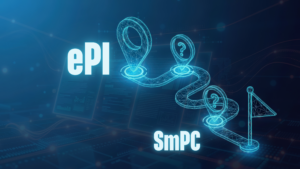
How pharma teams can prepare for structured product information, FHIR readiness, and EU ePI standards Your organization has spent decades

Regulatory data trust is an outcome of regulatory data management behavior, not intent Pharmaceutical organizations often think about regulatory trust

Global growth in pharma increases complexity before it increases value. This article explains why global labeling harmonization and aligned data foundations are essential for scaling across markets without slowing execution.

Pharma timelines don’t slip because teams are slow, they slip because data is immobile. The regulated information driving global submissions,

Fragmented regulatory data quietly slows launches, increases reconciliation work, and erodes trust. This article explains why centralized data management is becoming essential in pharma.

Pharma data governance enables compliance and speed by embedding control into data at the point of creation. Learn how centralized governance improves traceability, reuse, and execution across regulated environments.

The conversation about data quality for AI in pharma has shifted. It is no longer an upstream IT concern or

Digital transformation is not a system problem — it is a data flow problem Digital transformation initiatives often center on

2026 Pharma Readiness: Regulatory Readiness Is Now an Enterprise Capability Regulatory readiness has shifted from a supporting function to a

EMA ePI requirements are moving from roadmap item to operational mandate. This article explains what the shift means for labeling, regulatory, and CMC content operations.

On March 5, 2026, FDA published a final rule establishing a uniform 12-digit National Drug Code (NDC) format. The rule

Senior leaders are rarely pulled into submissions because teams are behind schedule. They are pulled in when outcomes become uncertain—and

Regulatory Work Is Stuck in a Failing Economic Model Pharmaceutical regulatory operations still run on a linear economic model in

For many years, pharma sustainability and regulatory functions ran largely separate agendas: ESG teams focused on Scope 3 emissions, material

Introduction: Why a Trusted Regulatory Space Is Becoming Necessary Digital transformation in life sciences is accelerating—but regulatory operations remain constrained

Why Regulatory Teams Are Shifting Toward Modular Content in eCTD 4.0 Submissions Traditional document-based processes—where content is authored, reviewed, and

Component-Based Labeling is Transforming Pharma Regulatory labeling is a dynamic ecosystem spanning multiple markets, health authorities, and product lifecycles —

The Current State: Siloed Tools and Disconnected Data Flows Regulatory content is everywhere—regulatory submissions, labeling, clinical documentation, quality systems, and

How governed, structured content enables responsible AI in life sciences. Artificial intelligence (AI) has moved from a buzzword to a

Global Labeling Harmonization in Pharma: Building a Single Source of Truth Pharmaceutical labeling remains one of the industry’s most fragmented

SPOR and IMDP 2.0: Turning Compliance into Competitive Advantage The Identification of Medicinal Products (IDMP) initiative was once viewed as

Digital Twin Pharma: The Future of Regulatory Submissions? Digital twins have transformed industries such as aerospace, automotive, and manufacturing by

Regulatory Information Management 2025: From Repository to Intelligence Hub For years, Regulatory Information Management (RIM) systems have been the quiet
Breaking Down Silos: Pharma’s Interoperability Imperative Pharma’s digital transformation has is modernizing labeling, digitized document management, and integrated Regulatory Information

ePI is reshaping pharma’s digital future. Learn how structured content and AI help life sciences companies meet compliance faster, with accuracy, agility, and scale.

eCTD 4.0 is reshaping regulatory submissions for life-sciences. Learn how structured content strategies help sponsors stay compliant and speed approvals.

Explore how structured content transforms life-sciences: driving reuse, traceability, regulatory readiness, and faster time-to-market in pharma. Includes download.

Explore how AI-SCA supports pharma’s shift to digital-first regulation (ePI, IDMP, CTD 4.0) by enabling modular, metadata-rich content, faster review, and audit-ready operations.

Take a quick self-assessment to benchmark your labeling operations. Learn how structured component authoring boosts submission agility, traceability and regulatory readiness.

Discover why modern labeling demands structured content. Learn how life-sciences companies can build resilience through reuse, governance and faster regulatory readiness.

Explore how outdated document-centric processes in global pharmaceutical labeling create risk—and how structured content authoring can reduce time-to-market by up to 50%.
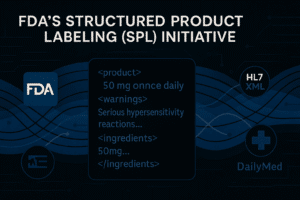
The pharmaceutical industry operates within an increasingly complex regulatory landscape where accuracy, consistency, and compliance are non-negotiable. The FDA adopted the SPL standard to improve regulatory processes and ensure more efficient oversight.

Discover why structured content authoring (SCA) is the strategic shift global pharma needs for labeling—cutting risk, accelerating updates and enforcing consistency across markets.

See how Boehringer Ingelheim accelerated its documentation workflow using structured component authoring—boosting efficiency, compliance and reuse in life-sciences.

Shift your regulatory submissions from manual to modern with structured content—cut duplication, accelerate review, and deliver faster in life sciences.

In pharmaceutical regulatory operations, most attention goes to visible systems—document management, RIM platforms, publishing tools, and increasingly, AI for structured authoring. But none of these tools can function effectively without one often-overlooked element: metadata.

Explore how structured content authoring accelerates ePI readiness in pharma—driving flexibility, multilingual reuse and machine-readable compliance.

A convergence of global mandates, production scale and AI readiness is forcing pharma to adopt structured content now. Delaying is no longer viable.

Discover how AI-powered structured content authoring transforms pharma documentation — from labeling and safety narratives to CTD module alignment and metadata tagging.

Future-proof your ePI strategy by combining AI-driven structured content authoring with global regulatory readiness—modular, machine-readable, scalable.

Learn how structured authoring transforms ePI from a formatting task into a strategic advantage—enabling metadata-rich, reusable content for global product information compliance.

Pharmaceutical labeling content requires compliance, accuracy, collaboration between departments and stakeholders, and often translation. When most of the process happens through disparate platforms, it becomes time-consuming and costly for life sciences organizations.

In part one of our Pharmaceutical Labeling and the Promise of SCA series, we examined the unique challenges in pharmaceutical labeling and why the industry has yet to utilize structured component authoring (SCA) fully. The verdict? Pharmaceutical labeling content has many components, including compliance, accuracy, collaboration between departments and stakeholders, as well as translation.

Recently, Docuvera attended DIA Europe 2023, a conference organized by the Drug Information Association (DIA), a global nonprofit. The event aims to bring together Life Sciences professionals to exchange knowledge and collaborate to improve healthcare worldwide and provides a platform to discuss the latest developments in healthcare and regulatory science.
See in our data sheet how Docuvera simplifies and improves the efficiency of creating and updating labeling & regulatory documents by reusing approved content.